2022-05-19
Diamond anatomy
In assessing the quality of diamonds, 4Cs provides a very reliable overview. However, gemologists or experienced diamond buyers will go beyond the 4C standard and focus on finer details. These details include the structure and angle of the diamond, the degree of fluorescence, the degree of inclusion, and the quality of polishing. Read on to learn about each of these topics.
Diamond structure
Although diamonds come in many shapes and sizes, all diamonds have five structural elements. The angle of these five elements determines how much light a diamond can reflect, which determines its brilliance.
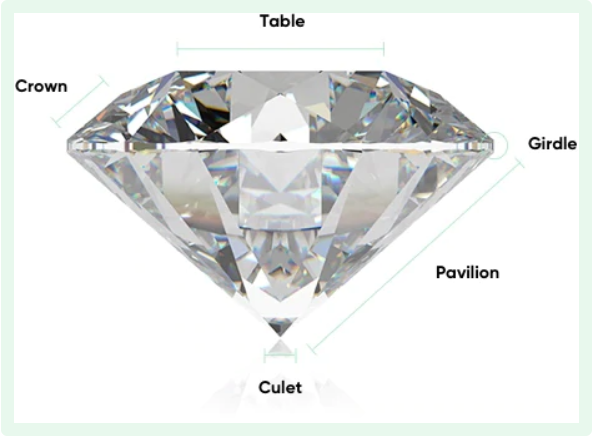
Table - a table is the flattest surface of a diamond. No matter what the shape of a diamond is, it is the biggest facet.
Working principle: when the light enters the diamond, the diamond table will refract the light downward. In turn, the light is reflected back from the pavilion and through the table - so most of the light from the diamond passes through the table to the observer's eyes. The size of the table will affect the amount of light that can enter the diamond. Therefore, it is an important factor used by gemologists in specifying the cutting grade of diamonds.
Crown - the diamond crown covers everything above the waist.
Working principle: similar to the diamond table, refracted light passes through the crown and then reflects back from the pavilion to the observer's eyes. Different faces disperse light in different directions, resulting in colorful and amazing flames.
Waist - the waist is the widest part of the diamond: the outermost edge of the connection between the crown and the bottom. When placed in a halo or bonded engagement ring setting, the waistline is usually hidden and flush with the metal when it meets the diamond. In the claw set or grooved engagement ring, you can see the waist without metal touching the diamond.
How it works: gemologists consider the waistline of diamonds when assigning cutting grades. If the waistline is too thin or too thick, even if the diamond has enough flash and structural stability, they will only assign a very good or good cutting grade to the diamond.
Pavilion - the diamond Pavilion is the area from the waist to the tip bottom.
How it works: most of the weight of a diamond is usually placed in its pavilion. This means that it is often considered the most valuable part of a diamond - but its angle is more important than its size.
The diamond Pavilion is neither too deep nor too shallow, which is very important. Too deep a pavilion will darken the diamond because it cannot reflect enough light back to the observer's eyes through the crown. From the table, the shallow Pavilion will produce the effect of "fish eye", which is caused by the waist reflection in the middle of the table, which is dim.
The best Pavilion angle is between 42.5% and 43.5%.
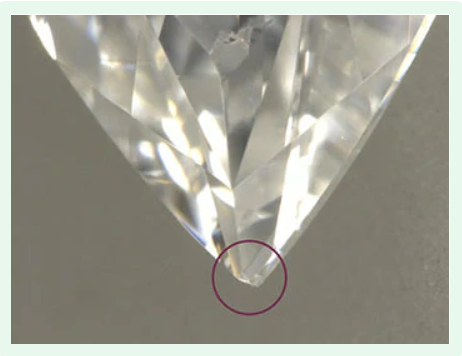
Tip bottom - tip bottom (pronounced cue let) is the bottom of the diamond Pavilion. It is a point or a tiny facet parallel to the desktop (i.e. the top of the diamond). If it is a facet, it can be polished or unpolished.
How it works: if the tip bottom is greater than the average, it may affect the overall appearance of the diamond: when you look down at the diamond from the desktop - just like when it is embedded in an engagement ring - you may see a large tip bottom. The large pointed bottom allows more light to escape from the bottom of the diamond rather than reflect back to the observer's eyes, forming a clear black circle.
Diamonds with a small pointed bottom may show the greatest brilliance.
Diamond proportion
When a gemologist grades diamonds, she measures their proportions and calculates five ratios: depth percentage, mesa percentage, crown angle and pavilion angle. These ratios help determine the cutting grade of diamonds and are included in their grading report.
Depth percentage
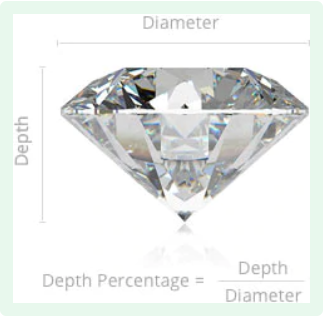
The depth percentage is one of the key factors to determine the diamond cutting grade. The depth percentage is expressed as the ratio of the distance from the table top to the tip bottom to the diameter of the diamond measured through the waist.
The depth should be 54% to 66% of the diamond diameter to optimize the flash effect. The depth percentage of diamonds with cutting grade of "very good" and "ideal" is within this range.
Table percentage
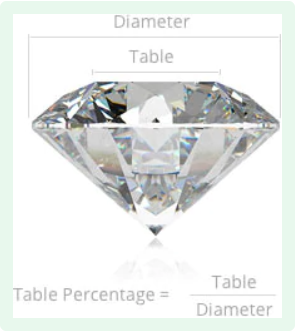
The countertop percentage is to balance the width of the countertop and the diameter of the diamond to produce the best flash. If the width of the table is too large or too small compared with the diameter of the diamond, the top of the diamond will appear flat or round, which will affect the flash in either way.
The ideal table percentage is in the range of 53% to 70%.
Crown angle
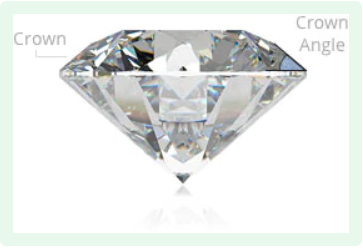
If the crown angle is too large, the flash will be limited when viewed from above. If the crown angle is too small, the top of the diamond may appear clear and transparent. Diamonds cut at the best angle produce more flash.
Most round diamonds have crown angles between 30% and 35%. The crown angle of round ideal cut diamond must be between 33.7% and 35.8%.
Pavilion corner
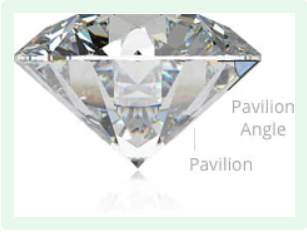
Like the crown angle, if the pavilion angle is too large, it will not emit obvious flash. If it is too shallow, the diamond may appear glassy. When cut into brilliance, the pavilion will reflect the brightest light through the top of the diamond.
The best Pavilion angle is in the range of 42.5% to 43.5%.
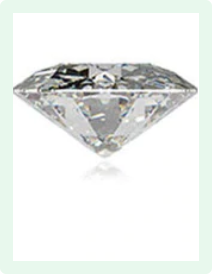
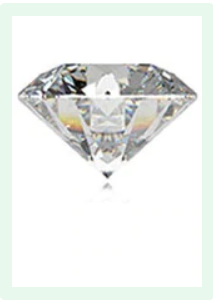
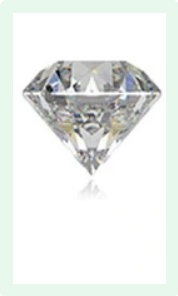
These three diamonds illustrate the difference between a diamond in the right proportion (Center) and a diamond too shallow (left) or too deep (right).
 |
 |
 |
|
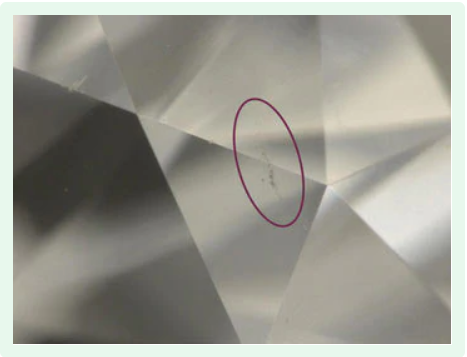
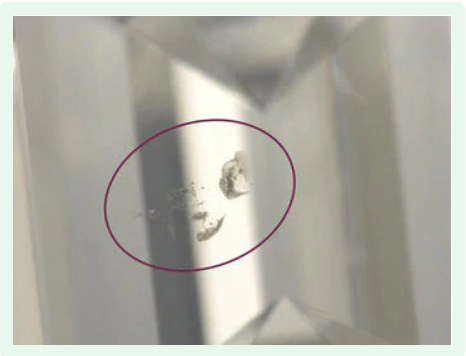
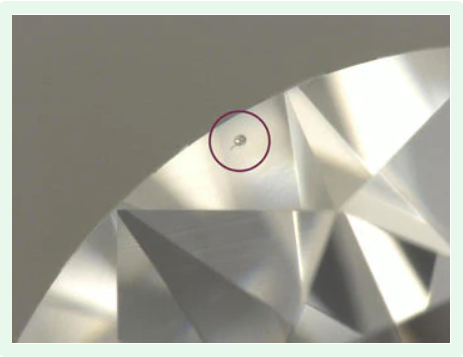
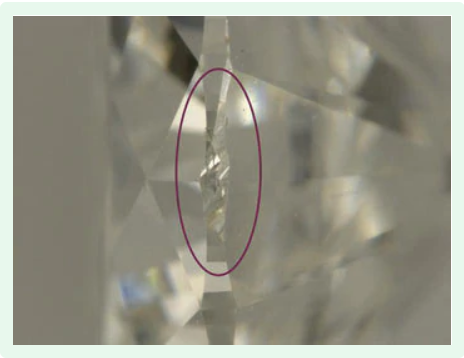
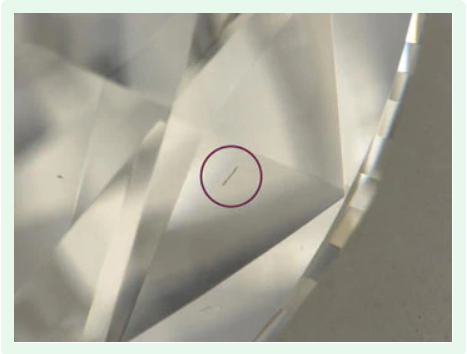
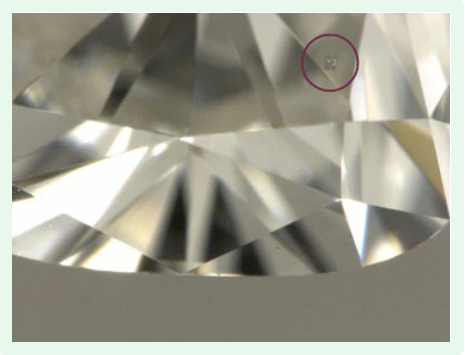
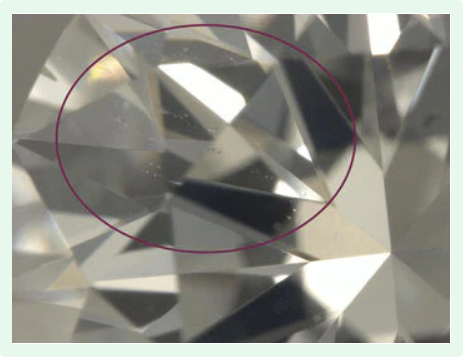
Note: the percentages above are specific to a round shaped diamond. The ideal proportions for other diamond shapes are all slightly different. Diamond SymmetryWhen grading a diamond, a gemologist evaluates the symmetry of its facets. Symmetry is an important factor in a diamond’s cut grade, and this is reflected in diamond pricing: A diamond with Excellent symmetry and polish may cost 10 to 15% more than a diamond with Good symmetry and polish. Why is symmetry important? When all the facets of a diamond are perfectly aligned, the light entering it is reflected back, creating brilliance. When the facets do not align well, less light is reflected, creating shadowed spots. Diamond symmetry is graded on a scale from Excellent to Poor. Excellent symmetry indicates perfect alignment of all facets. A diamond's symmetry can be compromised if the culet and table are off-center, if the facets are misshapen, or if the girdle is not straight. A misalignment of the crown and girdle is also a symmetry flaw. The symmetry grade of a certified diamond is shown on its grading report. Ritani does not offer diamonds with Fair or Poor symmetry grades, so you can be sure of your diamond's superior brilliance. Diamond Inclusions and BlemishesA diamond's clarity grade is based on how big and how visible its inclusions and blemishes are. An inclusion is a natural flaw within a diamond, and a blemish is a naturally caused imperfection on the stone's surface. Distinct from polish defects, blemishes occur naturally and are not due to human errors during the polishing process. Cavity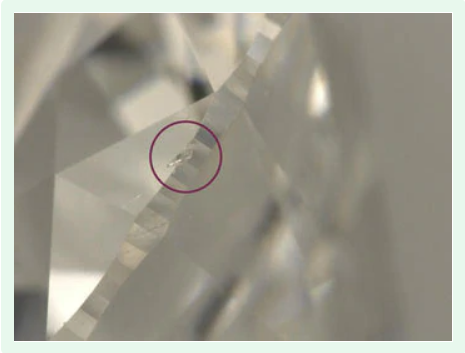 Essentially a hole in the diamond's surface, cavities can be found in a range of sizes and locations across the stone. Depending on its placement, a cavity could affect the overall durability of the stone. Those on the table are likely to be most visible when set in jewelry, compromising the diamond's value and quality.
Chip
|